
Cooling a large commercial building isn’t as simple as installing several individual air conditioners. Offices, hotels, shopping malls, hospitals, and large institutional spaces have different cooling loads, occupancy patterns, and ventilation requirements. This is where Centralized air conditioning services become useful.
A centralized AC system allows a building to manage cooling through a coordinated system rather than relying on separate units in every room. When properly designed, it can provide better temperature control, easier monitoring, and more consistent comfort across large spaces.
In this guide, we’ll look at how centralized air conditioning works, where it makes sense, what businesses should consider before installation, and how to choose the right Centralized AC company for a commercial project.
What Is a Centralized Air Conditioning System?
A centralized air conditioning system uses a common cooling system to condition air across multiple areas of a building.
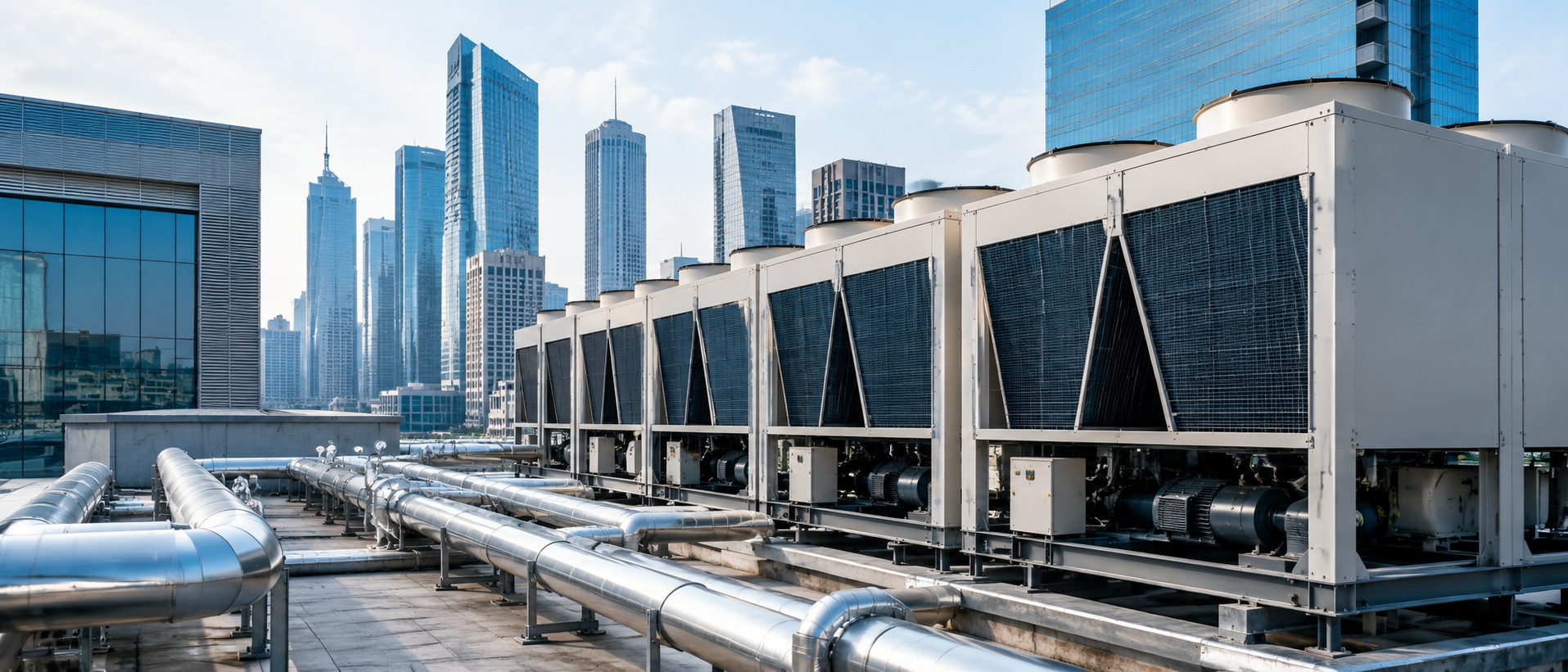
Unlike individual split AC units, the major components work together as one coordinated system. Depending on the building and cooling requirement, the setup may include chillers, air handling units, pumps, cooling towers, ducts, and control systems.
The exact configuration depends on the building’s size and purpose.
For example, a hotel may require different temperature settings for guest rooms, kitchens, restaurants, and conference areas. A well-designed centralized system can manage these different requirements more efficiently.
Why Large Commercial Buildings Need Centralized AC
Large buildings have a lot happening at the same time.
Hundreds of employees may occupy an office during working hours. A shopping mall may experience a major change in occupancy between morning and evening. Hotels have continuously changing room occupancy.
Because of this, cooling requirements aren’t constant.
A centralized system provides a coordinated approach to cooling. It can also make it easier for facility teams to monitor and manage different areas of the building.
For large projects, proper HVAC design is therefore just as important as selecting the equipment.
How Centralized AC Systems Work
The basic principle is straightforward.
A central cooling plant produces chilled water or conditioned air. The system then distributes cooling to different parts of the building through air handling equipment, ductwork, or other distribution components.
A typical centralized system may include:
- Chiller or central cooling equipment
- Air Handling Units (AHUs)
- Pumps
- Cooling towers, where applicable
- Ductwork
- Control systems
- Fresh air and ventilation equipment
The system continuously responds to the building’s cooling requirements.
Modern controls can also help facility teams monitor temperatures, equipment performance, and operating conditions.
Where Centralized Air Conditioning Is Used
Centralized AC is particularly suitable for buildings with substantial cooling requirements.
Common applications include:
Corporate Offices
Large office buildings need consistent cooling across workspaces, meeting rooms, reception areas, and common areas.
Shopping Malls
Malls have changing occupancy throughout the day. Centralized systems can support cooling across retail areas, food courts, corridors, and entertainment spaces.
Hotels
Hotels require climate control across guest rooms, restaurants, conference halls, kitchens, lobbies, and other spaces.
Hospitals
Healthcare facilities have specialized temperature, ventilation, and air-quality requirements. HVAC design must account for the function of individual areas.
Educational and Institutional Buildings
Universities, large schools, training centres, and government buildings can also benefit from centralized HVAC systems where the building size and cooling demand justify them.
Key Benefits of Centralized AC
The biggest advantage isn’t simply cooling a large area. It’s the ability to manage the building’s HVAC operation as a coordinated system.
Consistent Comfort
A properly designed centralized system helps maintain more consistent indoor temperatures across different zones.
This matters particularly in buildings where occupants spend several hours indoors.
Better Space Management
Individual outdoor units can take up considerable façade, terrace, or service-area space.
Centralized equipment can consolidate major components into designated plant areas, depending on the system design.
Centralized Monitoring
Building management teams can monitor system operation from a centralized control interface.
This makes it easier to identify abnormal operating conditions and respond to maintenance requirements.
Zoning Flexibility
Different areas may have different cooling requirements.
A well-designed system can provide zoning so that cooling can be managed according to occupancy and usage.
Potential Energy Efficiency
Centralized systems can be designed around the building’s actual cooling load rather than simply adding individual AC units.
However, efficiency depends heavily on equipment selection, system design, controls, operating conditions, and maintenance.
What to Consider Before Installation
Centralized AC isn’t automatically the right answer for every commercial property. Several factors should be assessed before selecting a system.
Building Size
The overall floor area and number of conditioned zones influence the system design.
Cooling Load
Engineers need to consider factors such as occupancy, lighting, equipment, solar heat gain, building orientation, and operating schedules.
Ventilation Requirements
Cooling and ventilation are related, but they aren’t the same thing. Commercial buildings need an appropriate fresh-air strategy alongside temperature control.
Available Plant Space
Chillers, pumps, AHUs, electrical equipment, and other components require appropriate locations and service access.
Future Expansion
If the building may expand or its occupancy may increase, the HVAC system should account for future requirements during the design stage.
Centralized AC vs Individual AC Units
Individual AC units can work well for smaller spaces.
However, managing dozens or hundreds of separate units across a large commercial property can become difficult.
A centralized system provides one coordinated approach to cooling and monitoring.
That said, the best choice depends on the project. Building size, usage, operating hours, available infrastructure, investment considerations, and maintenance requirements should all be evaluated before making a decision.
This is where professional HVAC engineering becomes important.
The Importance of Professional Commercial AC Installation
A high-quality air conditioning system can still perform poorly if the installation isn’t planned correctly.
Professional Commercial AC installation services should include proper equipment placement, piping or ductwork installation, electrical coordination, controls integration, testing, and commissioning.
Before installation begins, the project team should also coordinate with architects, electrical contractors, civil teams, and other building services.
Good coordination prevents problems later.
Why Choose an Experienced Centralized AC Company?
Centralized systems involve several interconnected components. Therefore, choosing a contractor based only on equipment supply can create challenges during installation and commissioning.
An experienced Centralized AC company should be able to support the project through:
- Site assessment
- Cooling load analysis
- HVAC design
- Equipment selection
- System engineering
- Installation
- Testing and commissioning
- Preventive maintenance
- Technical support
A capable team understands that every commercial building has different operating requirements.
Maintenance and Long-Term Performance
Installation is only the beginning.
Centralized AC systems require regular maintenance to remain reliable and efficient. Filters, coils, pumps, fans, controls, heat-transfer surfaces, and other components need periodic inspection and servicing.
Preventive maintenance can help identify issues before they result in major downtime.
It also gives facility managers a better understanding of equipment performance over time.
For large commercial properties, a planned maintenance schedule is far more practical than waiting for equipment to fail.
Choosing the Right System for Your Building
There isn’t one centralized AC configuration that works for every commercial property.
An office building may require a different solution from a hotel or shopping mall. Similarly, a hospital has considerably different HVAC requirements from a conventional office.
The right approach starts with understanding the building.
At Vigasa Industries, we provide Centralized air conditioning services for commercial and industrial applications, including system planning, engineering, installation, commissioning, and maintenance support. Our team evaluates the building’s cooling requirements, operating conditions, available infrastructure, and future needs before recommending a suitable HVAC solution.
The objective isn’t simply to cool the building.
It’s to create a system that works reliably with the way the building operates.
Frequently Asked Questions
A centralized AC system uses common cooling equipment and distribution infrastructure to provide air conditioning across multiple areas of a building. It is commonly used in large commercial and institutional properties.
Yes. Centralized systems can be suitable for large offices where multiple areas require coordinated temperature control, ventilation, and centralized monitoring.
Large offices, hotels, shopping malls, hospitals, educational institutions, airports, and industrial facilities commonly use centralized HVAC systems where their cooling requirements justify the installation.
Depending on the project, Commercial AC installation services can include equipment installation, ductwork or piping, electrical coordination, controls, testing, commissioning, and system handover.
Maintenance frequency depends on the equipment, operating hours, environment, and manufacturer's recommendations. Large commercial systems generally benefit from planned preventive maintenance throughout the year.
Look for a company with proven commercial HVAC experience, engineering capabilities, professional installation teams, commissioning expertise, and reliable after-sales support. A site assessment should ideally happen before the system is finalized.