
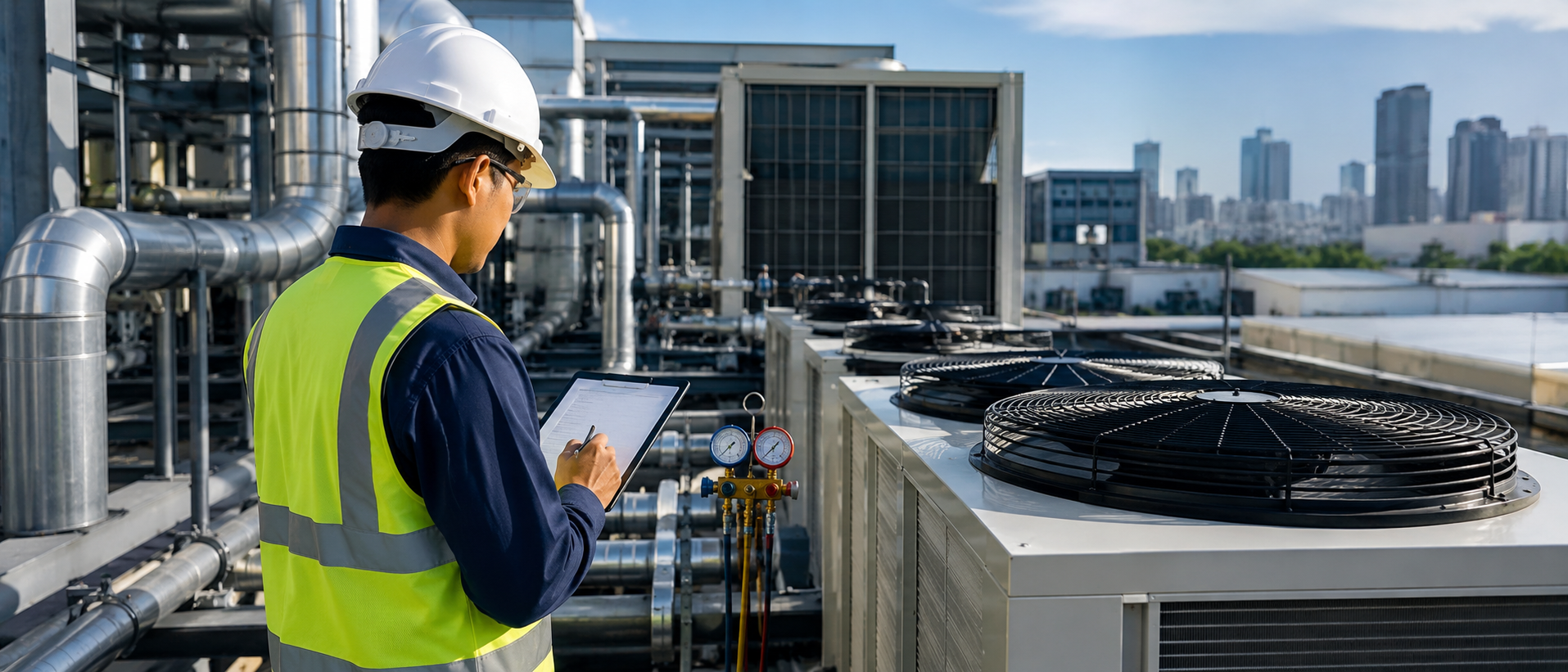
Installing HVAC equipment is only one part of completing a commercial or industrial HVAC project. A system may have the right equipment, ductwork, controls, and electrical connections, yet still fail to perform as expected if everything isn’t tested and balanced properly. This is where HVAC commissioning becomes important. Professional HVAC project execution services help ensure that the installed system operates according to its design, while experienced HVAC project management services coordinate testing, adjustments, and handover. In this guide, we’ll explain what HVAC commissioning involves, why it matters, and how businesses can benefit from working with an experienced HVAC system installation company.
What Is HVAC Commissioning?
HVAC commissioning is the process of checking, testing, adjusting, and verifying an HVAC system after installation.
The objective is simple: make sure the system operates the way it was designed to operate.
Commissioning isn’t the same as switching the equipment on for the first time. Engineers examine individual components and then evaluate how the complete system works together.
This can include chillers, AHUs, pumps, cooling towers, ventilation equipment, ductwork, controls, sensors, and other connected components.
Why Commissioning Matters After Installation
A newly installed HVAC system isn’t automatically a properly functioning HVAC system.
Small issues can affect performance.
For example, incorrect airflow, poorly calibrated sensors, improper valve settings, or control-system errors may prevent a system from reaching the required conditions.
Commissioning helps identify these problems before the building enters normal operation.
As a result, businesses can start with a system that has been tested rather than simply installed.
What Happens During HVAC Commissioning?
A professional commissioning process usually follows a structured sequence.
The project team reviews the design requirements, inspects installed equipment, performs functional tests, records measurements, and makes necessary adjustments.
Depending on the project, commissioning may involve:
- Equipment inspection
- Electrical checks
- Air balancing
- Water balancing
- Control verification
- Temperature testing
- Pressure measurements
- Safety checks
- Functional performance testing
- Final documentation
The exact process depends on the size and complexity of the HVAC installation.
Checking Equipment Performance
The first step is confirming that the major equipment operates correctly.
Engineers may inspect:
- Chillers
- AHUs
- FCUs
- Pumps
- Cooling towers
- Exhaust systems
- Ventilation equipment
- Variable frequency drives
They check operating conditions against the approved design and equipment specifications. If readings don’t match the expected range, the team investigates the cause before final handover.
Testing Airflow and Water Flow
Correct airflow is essential for HVAC performance.
Even a high-quality AHU won’t provide the intended result if air isn’t reaching the required zones correctly. Engineers measure airflow at relevant points and adjust dampers or other components where necessary. For chilled-water systems, water flow also needs to be verified. Proper balancing helps distribute cooling more evenly across different areas of the building.
Verifying Temperature and Humidity Control
Temperature is one of the easiest HVAC parameters to notice.
However, commissioning looks beyond the thermostat.
Engineers verify whether the system can maintain the required conditions under actual operating circumstances.
Depending on the application, this may include checking:
- Supply air temperature
- Return air temperature
- Room temperature
- Relative humidity
- Chilled-water temperatures
- Outdoor air conditions
These checks are particularly important in hospitals, laboratories, data centers, pharmaceutical facilities, and other environments with strict environmental requirements.
Testing HVAC Controls and Automation
Modern HVAC systems depend heavily on controls.
Sensors, thermostats, control panels, building management systems, and automated sequences all need to communicate correctly.
During commissioning, engineers verify whether:
- Sensors provide accurate readings
- Control sequences operate correctly
- Alarms function properly
- Equipment starts and stops as programmed
- Setpoints are maintained
- Automated responses work as intended
A problem in the control system can affect an otherwise well-installed HVAC system.
Identifying Installation Issues
Commissioning provides an opportunity to identify problems before they become operational headaches.
For example, engineers may discover:
- Air leakage
- Incorrect damper positions
- Improper sensor calibration
- Insufficient airflow
- Incorrect valve settings
- Control-system errors
- Unusual equipment vibration
- Unexpected temperature variations
Addressing these issues before handover is much easier than discovering them after occupants move into the building.
Documentation and Final Handover
Good commissioning doesn’t end with testing.
The project team should record important readings, test results, equipment information, and adjustments made during the process.
This documentation provides facility managers with a useful reference for future maintenance.
A proper handover may include:
- Test reports
- Equipment schedules
- Control settings
- As-built information
- Operation manuals
- Maintenance recommendations
- Commissioning records
Clear documentation makes future troubleshooting easier.
How Commissioning Improves Long-Term HVAC Performance
Commissioning isn’t only about getting the system working on day one.
It can also establish a reliable baseline for future maintenance and performance monitoring.
When the original operating conditions are documented, facility teams can compare future readings against those benchmarks.
That makes it easier to identify performance deterioration.
Regular maintenance can then address issues before they lead to major system failures.
Why Experienced HVAC Project Management Matters
Large HVAC projects involve multiple teams and technical disciplines.
Mechanical contractors, electrical teams, controls specialists, civil contractors, consultants, and building operators may all be involved.
This is where professional HVAC project management services become valuable.
An experienced project management team coordinates:
- Installation schedules
- Equipment testing
- Contractor activities
- Quality inspections
- Commissioning activities
- Documentation
- Final handover
Better coordination means fewer gaps between installation and commissioning.
Choosing the Right HVAC Partner
Commissioning should be considered during the planning stage, not as an afterthought.
When selecting an HVAC system installation company, ask about its complete project capabilities.
Look for experience in:
- HVAC design
- Equipment installation
- Testing and balancing
- Controls integration
- Commissioning
- Project management
- Preventive maintenance
At Vigasa Industries, we approach HVAC projects from installation through final commissioning and handover. Our HVAC project execution services combine engineering coordination, installation expertise, testing, commissioning, and project management to help commercial and industrial clients achieve reliable system performance.
The goal is simple: don’t just install an HVAC system. Make sure it works the way it was designed to work.
Frequently Asked Questions
HVAC commissioning is the process of inspecting, testing, balancing, adjusting, and verifying an HVAC system after installation to ensure it performs according to its design requirements.
Installation alone doesn't guarantee correct performance. Commissioning helps identify airflow, control, temperature, equipment, and installation issues before the system enters regular operation.
Depending on the project, HVAC project execution services can include engineering coordination, equipment installation, testing, balancing, commissioning, documentation, and final handover.
An experienced HVAC system installation company can inspect installed equipment, perform functional tests, coordinate adjustments, verify system performance, and support final commissioning.
HVAC project management services coordinate contractors, schedules, testing activities, documentation, and handover requirements to ensure commissioning takes place systematically.
Commissioning can identify installation and performance issues early and establish baseline operating data. This can make future maintenance and troubleshooting more effective.